The events
Chopping, sawing, log rolling and the climb: the lumberjack events explained
What each contest in the arena is, how it is won and what to watch for, from the listing, the show's site and Wikipedia's articles on the sport.
Find my lumberjack show date ↗Quick answer
Yes, it helps to know the events before you sit down. The listing names chopping, sawing, axe throwing, log rolling and a 50-foot tree climb; Wikipedia adds boom running, hot sawing, speed climbing and more. Each one comes from a real logging job turned into a race.
Where the events come from
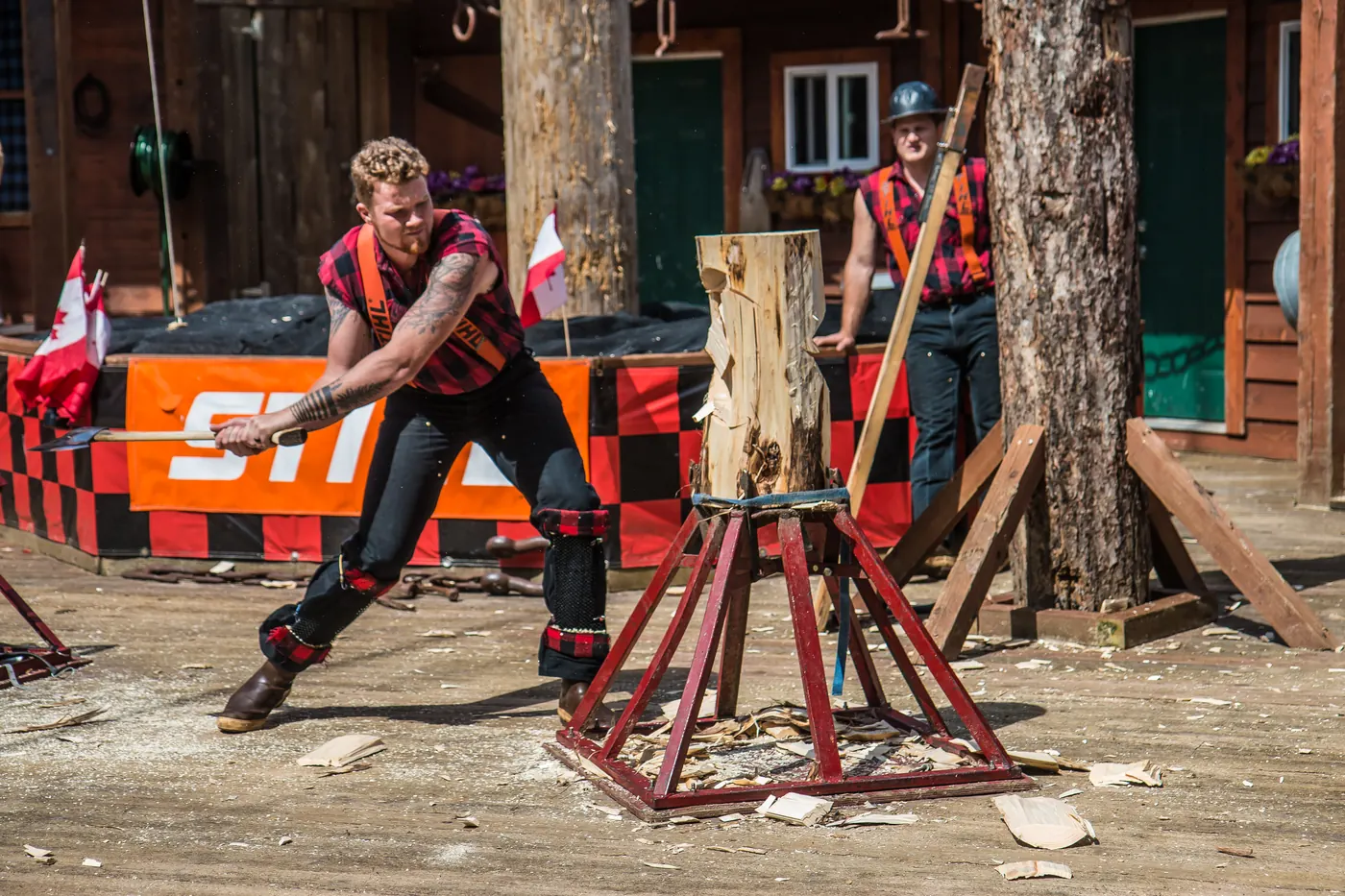
Wikipedia's article on the show says timber crews around 1900 held contests among themselves, and that the Great Alaskan Lumberjack Show recreates the contests of that era. The modern sport has its own big stage at the Lumberjack World Championships in Hayward, Wisconsin, which Wikipedia says has been held every year since 1960 with events in sawing, chopping, logrolling and climbing. The show's founder grew up in Hayward, according to Wikipedia, so the Ketchikan programme borrows directly from that tradition.
Chopping
Chopping races test how fast a lumberjack can sever a log with an axe. Wikipedia lists underhand chopping, where the competitor stands on a horizontal log and chops between their feet, and woodchopping on a standing block among the show's events. The show's own site mentions seven-pound axes. Watch the rhythm rather than the force: the fastest choppers place each strike so the chips fly out cleanly and the cut meets in the middle.
Sawing
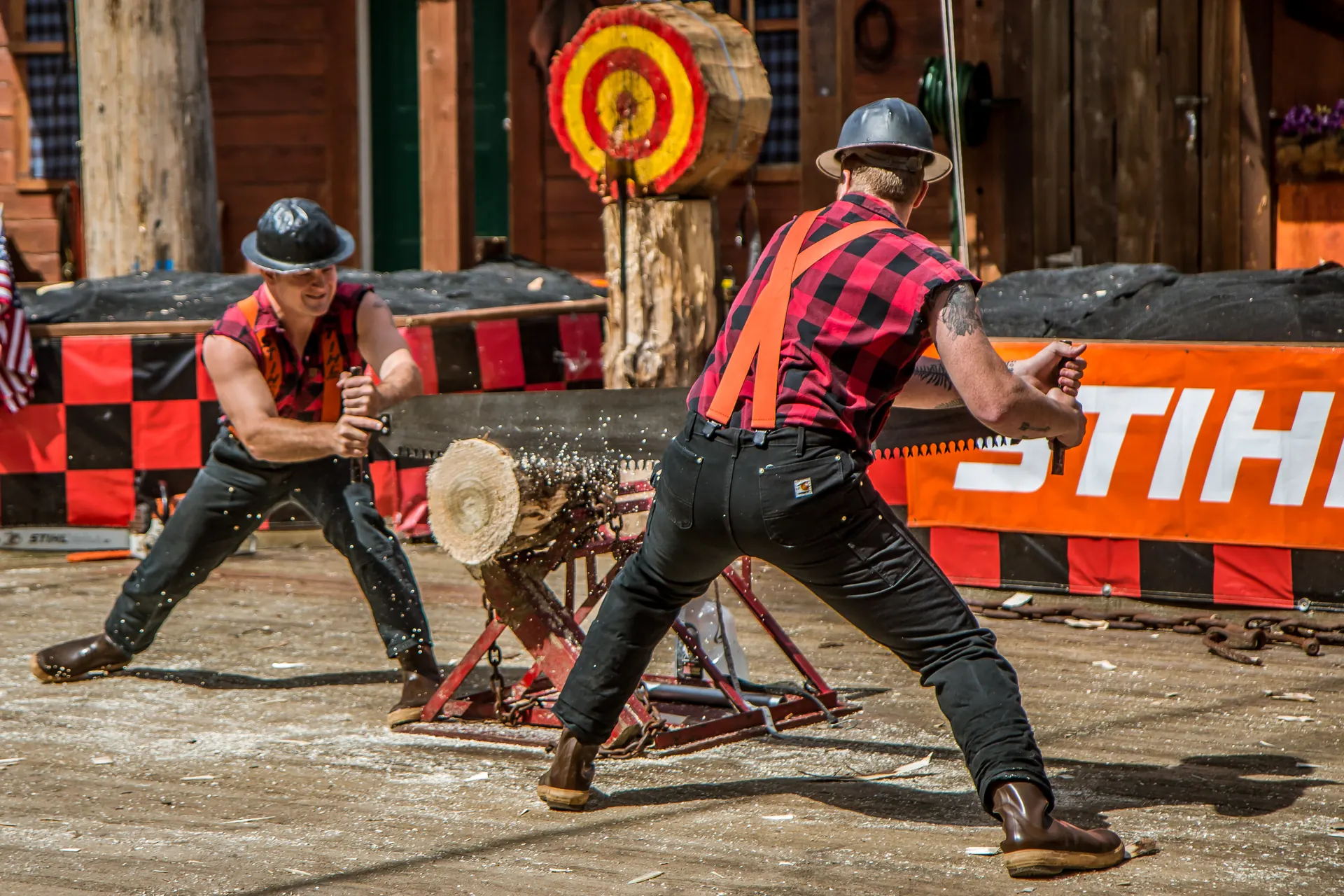
The sawing events pit pairs and single competitors against a log with a hand saw. Wikipedia lists crosscut sawing, bucksawing and hot sawing among the show's events. Its crosscut saw article explains that two-man saws built for bucking and felling cut on the pull stroke, which is why a pair works in rhythm, each pulling in turn. The show's site describes six-foot razor-sharp saws, and hot sawing, in Wikipedia's list, brings in the souped-up chainsaws the site also mentions.
Axe throwing
The listing names axe throwing among the arena events, and the same skill is what you try yourself after the show. Wikipedia's article on axe throwing says throwing large double-bit felling axes has sometimes featured in lumberjack and woodsman competitions. In the arena the lumberjacks throw at a round target set up on a log; afterwards, in your own session, the listing says you learn to throw a 5 lb double-bit axe and compete against the others.
Log rolling

Log rolling, or birling, is described by Wikipedia as a sparring sport between two competitors standing on a free-floating log, each trying to dislodge the other by spinning and kicking it. The first to lose contact with both feet and fall in loses the fall. In Ketchikan, Wikipedia says, the pool is not deep, and the rollers also use fancy footwork to splash each other, which is why the front rows near the water may get wet.
Boom running
Wikipedia's sport article describes boom running as racing along a boom, a coupled line of floating logs, in both directions without falling into the water. It is listed among the show's events. It looks easy for the first few logs and very hard after that, since every log moves under the runner's weight.
The tree climb
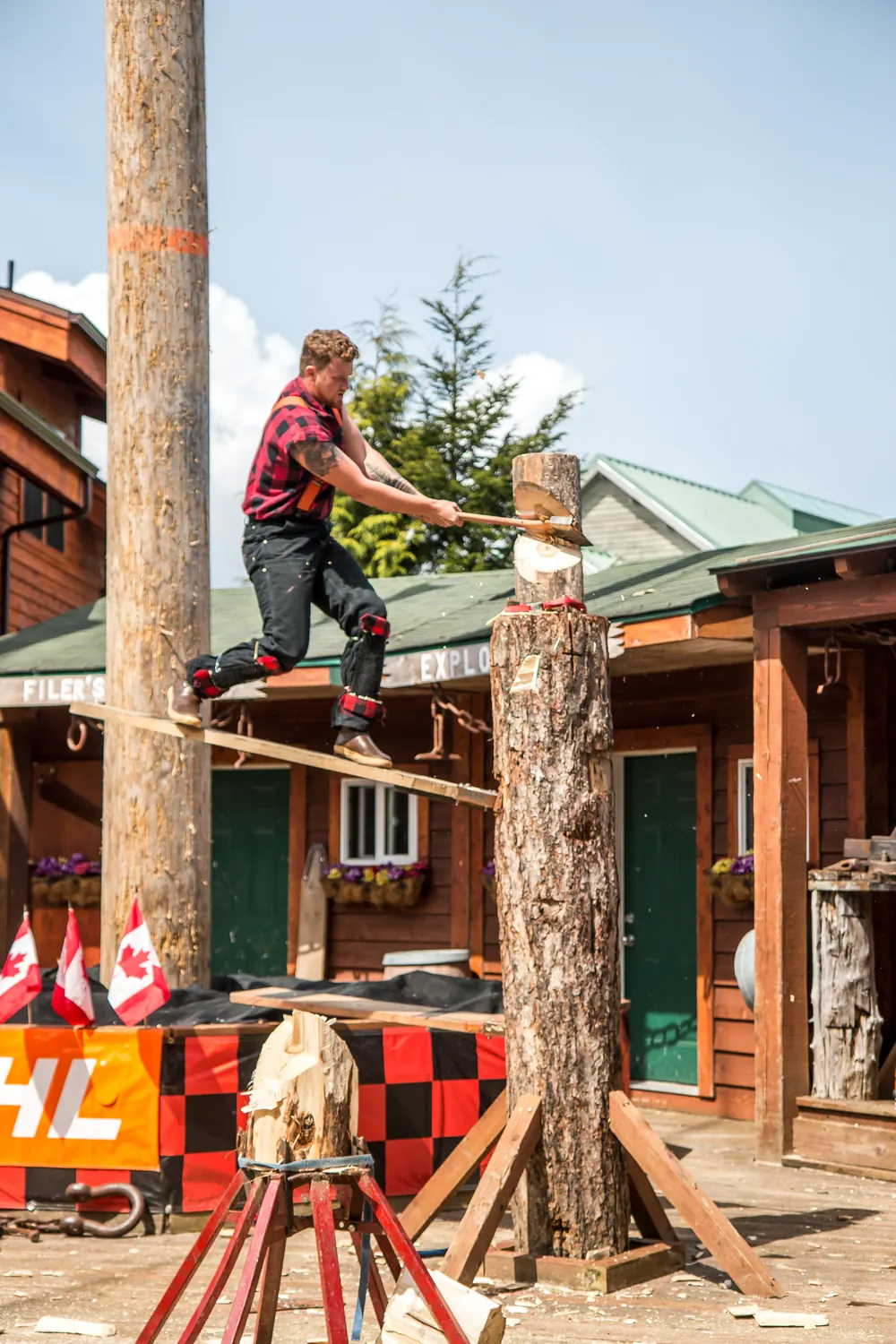
The listing's thrilling 50-foot tree climb is the event that gets the crowd looking up. Wikipedia says the climbers race up a tree 50 feet tall and then free fall, and describes another version using only a leather strap and spiked shoes. The show's site mentions tree climbing gaffs, the spikes strapped to the boots. Wikipedia also lists speed climbing, tree topping and obstacle pole racing among the events that have appeared in the programme.
How the rivalry is scored
The listing says the lumberjacks compete for the title of Bull of the Woods. Wikipedia describes the host awarding a woodchip to a supporter of the winning team after each contest, and the audience cheering for one side or the other according to where they sit. You do not need to follow any scoring rules to enjoy it: the host tells you who is ahead as the show goes on.
What to watch for
Sit about midway up the grandstand if you can, which the show's own site passes on as reviewers' advice, so you can see the climbing poles and the pool. Watch the feet in log rolling, the timing of the pair on the crosscut saw and the placement of the axe in the chopping races. Then, after the show, keep that axe throw in mind: it is your turn next.
Sources